
Curio - Antique Identifier
Dionysus Labs, LLCLifestyle
4.7258.00 Reviews
- Version
- 1.9.0
- Installs
- 100.00K
- Age Rating
- Everyone
Screenshots
Our Review of Curio - Antique Identifier
 Analysis by Appyee
One of the most useful ways to approach an unfamiliar heirloom is to treat a photo-based identification as a first clue, not a verdict. That mindset matters with Curio - Antique Identifier: it can help me start asking better questions about an object, but a photo cannot reveal every detail that affects age, authenticity, condition, or value. I find the app most helpful when I use it to orient myself before deciding whether to research further or ask a specialist.
Reading the result with a critical eye
When a result suggests a period, origin, or possible value, I would compare that suggestion with details the image may not capture: marks on the underside, a maker’s stamp, construction, repairs, and wear. If the object has several distinct parts, photographing the whole item and then its distinguishing details can give the identification process more context. This is a practical workflow rather than a promise that every close-up will produce a definitive answer.
I would also keep the object’s story separate from the app’s estimate. A family history, purchase receipt, or known chain of ownership may be more useful for a serious valuation than an image-based guess. For insurance, a sale, or an estate decision, I would treat Curio as a starting point and seek an in-person assessment where the stakes justify it.
Useful for browsing, not a substitute for expertise
Compared with a general web search, a photo-based antiques app can reduce the effort of finding the right terms to search. That is especially handy when I do not know whether a decorative object is a particular kind of vessel, ornament, or collectible. Search engines and collector forums can still be better for comparing multiple examples, checking specialist terminology, and finding discussions of a specific maker or model.
Printed reference books have a different strength: they offer curated background and can be consulted without a connection, but they are less convenient when I am standing in a market with an object in hand. A dealer or appraiser can examine materials and construction directly, which a picture cannot do. I see Curio as a useful bridge between casual curiosity and deeper research, not a replacement for either reference sources or human expertise.
A sensible market-day routine
Imagine I spot an old-looking brooch at a weekend market. I would first ask the seller what they know, then take a clear photo if it is appropriate and use the result to identify clues worth checking. If the app points me toward a broad style or category, I can ask more focused questions about the back, clasp, markings, and condition instead of relying on appearance alone.
That sequence also helps me avoid a common trap: making a purchase because an estimated value sounds exciting. I would compare the asking price with independent examples and remember that condition, provenance, and authenticity can change the picture considerably. If I cannot check those points, I would be comfortable walking away rather than treating an app result as proof of a bargain.
Who is likely to get the most from it
The app makes the most sense for curious owners, beginning collectors, and people sorting through inherited objects who want a quick way to explore what they have. It can turn a vague question into a more specific research path and make browsing antiques feel less intimidating. Someone who regularly visits flea markets may appreciate having an identification tool close at hand, provided they are willing to verify important claims elsewhere.
On the other hand, I would not rely on it as the main tool for professional buying, authentication, or a formal valuation. Experienced collectors may prefer specialist catalogues and communities that focus on a narrow field, while anyone needing a defensible appraisal should consult a qualified person who can inspect the item. If your interest is mainly in finding current sale prices, dedicated marketplace searches may be more useful than an identification-first approach.
Access in everyday settings
Because the central task involves taking or using an image, the app’s usefulness depends partly on whether that step is comfortable for you. Someone who finds camera controls difficult, cannot easily hold an object steady, or has trouble framing small details may need another person’s help. Taking the object to a well-lit, stable surface can make the process easier without requiring a rushed shot.
For low-vision users, the practical question is whether the on-screen text and controls are comfortable to read and operate on their device. I would try a familiar object first, in a calm setting, before depending on the app during a crowded market visit. A companion can help with photographing an item or reading a result, though that is a workaround rather than a built-in accessibility feature.
Readability and navigation
Ever found yourself staring at a mysterious antique piece and wondering about its history or value? Well, that's where Curio - Antique Identifier comes into play. This nifty app is like having an antiques expert in your pocket, ready to spill the beans on your vintage finds.
Getting Started with Curio
Jumping into Curio is as easy as pie. Once you download the app, available on both Android and iOS, you'll be greeted with a clean, user-friendly interface. It's intuitive enough that even if you're not a tech whiz, you'll navigate it like a pro.
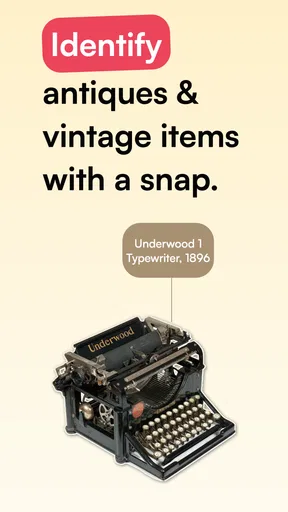
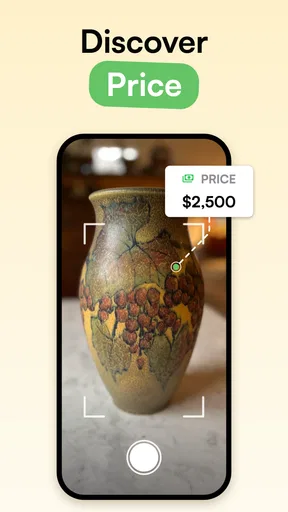
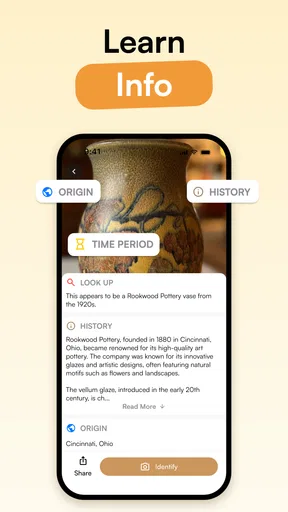
The app uses advanced AI technology to scan and identify antiques. All you need to do is snap a photo of the item you're curious about, and Curio will do its magic. The app provides detailed information about the object's history, origin, and estimated value. It's like having a personal history buff and appraiser at your fingertips.
Motor and sensory considerations
The standout feature of Curio has to be its image recognition capability. It's surprisingly accurate and fast. I tested it with a few items around my house – an old clock, a vintage vase, and even a mysterious pendant. The app quickly identified each piece and provided intriguing insights.
Another cool feature is the extensive database. Curio boasts a vast collection of information on various antique categories, from furniture and jewelry to art and collectibles. The app is continually updated, ensuring you have access to the latest data.
For those who love to learn, Curio offers detailed articles and fun facts about different antiques and their histories. It's like a mini history lesson every time you use the app.
Situational access
If you're a collector, history enthusiast, or just someone with a curious mind, Curio is a fantastic tool. It's not just about identifying items; it's about uncovering stories and understanding the past. Plus, it's a great conversation starter at gatherings!
The convenience factor is also a huge win. No more endless Googling or flipping through dusty books. Curio puts all the info in one place, and it's just a tap away.
Remaining barriers
While Curio is pretty impressive, there's always room for tweaks. Sometimes, the identification process can be a bit off, especially with items that are heavily worn or obscure. However, the app learns and improves over time, which is promising.
Another thing is the occasional need for a stable internet connection. If you're in a remote area with spotty Wi-Fi, Curio might take a bit longer to load its database. But hey, nothing's perfect, right?
Inclusive verdict
All in all, Curio - Antique Identifier is a fantastic app for anyone interested in the world of antiques. It's educational, fun, and incredibly practical. Whether you're looking to appraise your family heirlooms or just curious about a flea market find, Curio has got you covered.
So, next time you stumble upon a curious old object, give Curio a try. Who knows? You might be sitting on a hidden treasure!
What to expect before installing
Curio is a free lifestyle app from Dionysus Labs, LLC, with optional in-app purchases priced from about five dollars to around sixty dollars per item. It is rated for Everyone, has a 4.5 average from around 2,200 ratings, and has been installed over 100,000 times. The current version is 1.8.1, and it requires Android 7.0 or later. Those details make it approachable to try, but I would check the purchase screen carefully before paying for anything and decide whether the app’s results suit my needs first.
For a first test, I would choose an object whose identity I can partly verify: perhaps a familiar household ornament or a piece with a visible maker’s mark. That gives me a way to judge whether the result is plausible without risking a purchase decision or relying on a high-stakes estimate. A second test with a different type of item can show whether the app is useful across the kinds of antiques I actually encounter.
Getting a more useful photo
Photo quality is not just about sharpness. I would place an item against a plain background, avoid harsh reflections on glass or polished metal, and include enough of the object to show its shape. Then I would take a separate close-up of a mark or unusual feature. This simple two-view approach helps me preserve context while also showing details that could distinguish one object from another.
For fragile or valuable pieces, I would never move or handle them in a way that risks damage just to get a better picture. If an item is fixed in place, too delicate to turn, or difficult to photograph safely, a cautious partial view is preferable to forcing the process. In those cases, Curio may still offer a starting point, but an expert who can inspect it safely is the better next step.
When speed helps—and when it misleads
The quick photo workflow is most valuable when the goal is orientation: learning what words to use, which details to investigate, or what broad category an object might fit. It is less useful when I need a precise answer immediately. An image-based estimate can sound more definite than the evidence warrants, so I try to distinguish a confident-looking result from a verified conclusion.
That distinction is particularly important when sorting an estate or deciding whether to sell. I would record the item’s visible marks and condition, keep any family notes or paperwork, and use Curio to guide further research rather than discard objects based on a single result. The app can help organize questions, but it cannot establish provenance just by recognizing an image.
Cost, connection, and a realistic choice
Although the app is free to install, the presence of optional purchases means it is worth deciding what you want from it before spending. If you only have a few objects to identify, start with the free experience and see whether its answers are useful enough to justify an upgrade. If you mainly need dependable market pricing or formal documentation, paying for an app may still leave you needing a specialist or a more focused source.
Connection can also shape when it is convenient to use. At home, I can take time to photograph an object and revisit the result while researching its marks. At an outdoor market or in an old building with unreliable service, I would not assume the full process will be equally smooth. I would take notes or photos for later rather than letting a slow response pressure me into a quick decision.
Who should pass, and who should try it
I would recommend trying Curio if you enjoy learning about objects, have a small collection, or want an approachable first step when sorting inherited belongings. Its strongest role is helping a non-specialist move from “What is this?” to a more informed next question. It can also make casual browsing more engaging, especially when the result encourages you to notice a detail you might otherwise overlook.
I would skip it as a primary tool if you need guaranteed identification, formal appraisal, or a specialist opinion on a rare or high-value piece. It may also be a poor fit if taking and framing photos is uncomfortable and you do not have help available. In those situations, a human appraiser, a focused collector group, or a reference source matched to the object is more appropriate.
My inclusive verdict
What I appreciate most is the low-pressure way a photo can open a path into antique research; what I would keep in mind is that access and accuracy both depend on the situation. A clear image, a steady surface, readable results, and a reliable connection can make the experience easier, while small details, worn surfaces, and difficult lighting can get in the way. I see Curio as a useful companion for curiosity, not an authority that should make decisions on my behalf.
If you approach it with that balance, the app can help make antiques feel less opaque without asking you to become an expert first. I would use it to explore, compare clues, and decide what to investigate next—and turn to a specialist whenever authenticity or money is on the line.
Verdict
Strengths of Curio - Antique Identifier
- Accurately identifies various antiques.
- User-friendly interface for quick searches.
- Offers detailed history and value insights.
- Supports multiple languages for accessibility.
- Regular updates with new identification features.
Limitations of Curio - Antique Identifier
- Requires a stable internet connection.
- Limited offline functionality.
- Advertisements can interrupt usage.
- Some features require premium access.
- Occasional misidentification of obscure items.
Similar Picks in This Category
View All
SmartThings
Samsung Electronics Co., Ltd.4.6

Google Home
Google LLC4.0

Pinterest4.2

Astrotalk - Talk to Astrologer
Astrology & Horoscope4.7

My Verizon
Verizon Consumer Group4.5

Samsung Wallet (Samsung Pay)
Samsung Electronics Co., Ltd.4.1
Frequently Asked Questions
What is Curio - Antique Identifier and how does it work?
Curio - Antique Identifier is an app designed to help users identify and learn more about antiques. By simply taking a photo of an item, the app uses advanced image recognition technology to analyze and provide information about its history, origin, and estimated value. This makes it a valuable tool for collectors and enthusiasts alike.
Is Curio - Antique Identifier free to use?
Curio offers both free and premium versions. The free version provides basic identification and information, while the premium subscription unlocks advanced features such as detailed historical context, expert valuations, and an ad-free experience. Users can choose a plan that best fits their needs and budget.
How accurate is the identification provided by Curio?
The accuracy of Curio's identification depends on the quality of the photo and the uniqueness of the item. While the app uses sophisticated algorithms, it may not always be 100% accurate. For rare or unusual items, professional appraisal might still be necessary to confirm the app's findings.
What should I do if Curio cannot identify my item?
If Curio is unable to identify your item, consider trying again with a clearer photo. Ensure good lighting and a plain background to improve accuracy. If the app still cannot identify the item, you may contact support or use the community feature to seek help from other users and experts.
Does Curio - Antique Identifier work for all types of antiques?
Curio is designed to identify a wide range of antiques, including furniture, coins, jewelry, art, and more. However, extremely rare or highly specialized items might require additional research or expert consultation. The app continually updates its database to improve coverage and accuracy.
